
US midterm voting on Tuesday ushered in a wave of historic leadership across the country, marking an electoral milestone on a night when voters issued a sharp rejection of President Donald Trump’s second term.
The first Black female governor, the first openly gay male senator, the first Muslim senator, and the first female Native American governor all won landslide elections, giving Democrats a landslide lead.
Bill Schibler, chief strategy officer of the nonprofit State Voice, a network advocating for civic engagement and equality, told AFP that the night was “a huge rebuke against hate and division.”
“We’re seeing an electorate that increasingly sees themselves in their leaders and in the leaders who come from the communities they now represent,” Schibler said.
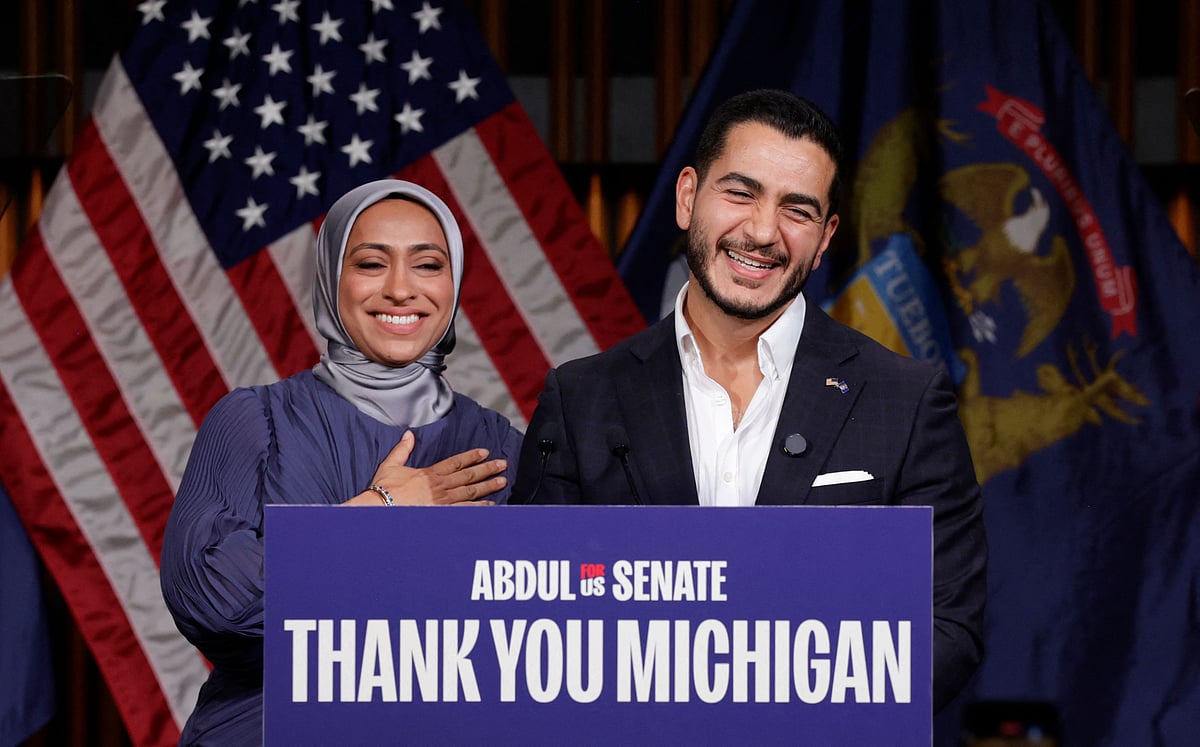
In Michigan, leftist Abdul El-Sayed becomes the first Muslim elected to the US Senate.
The former medical administrator drew huge crowds in the campaign, but faced anti-Muslim rhetoric from his opponents in the fierce race.
The Council on American-Islamic Relations advocacy group praised al-Sayed for persisting despite “endless Islamophobic attacks”.
“Our communities worked hard to ensure that our voices were heard and that we were properly represented in the Senate,” the organization said.
“This is possible only when we come forward and vote together.”
‘Historic Election’
Democrat Keisha Lance Bottoms won the race for governor in the southern state of Georgia, making her the first Black woman elected to the top post in any US state.
Bottoms, the former mayor of Atlanta, defeated billionaire health care executive Rick Jackson, a victory that returned the governor’s office to Democrats after more than two decades of Republican control.
Democratic Rep. Chris Pappas, meanwhile, will become the first openly gay person to serve in the U.S. Senate after winning in New Hampshire. He has served in the US House of Representatives since 2019.
“No one should be discriminated against based on who they are or who they love,” he said on his website.
In New Mexico, Democrat Deb Haaland defeated Republican Greg Hull to become the first Native American woman elected governor.
A member of the Laguna Pueblo Tribe, she served as Secretary of the Interior under former President Joe Biden, the first Native American to serve as a U.S. Cabinet secretary.
Peggy Flanagan, Democrat of Minnesota, was elected the first female Native American senator.
Trump’s sweeping midterm rebuke also saw several state-level electoral firsts, including the victory of Gina Hinojosa, the first Latina governor in Texas.
Looking ahead, if current House Minority Leader Hakeem Jeffries wins the speakership in the new Congress as expected, he will become the first Black Speaker of the House in U.S. history.
“This was a historic election where people decided to believe in themselves and to really lean into the hope of the promise of this country, rejecting attempts to silence the voices of the people,” Scheibler said.